 Quick Links
 Connect us

 Directors Databank (Empannel Yourself)
 Become a
  Become a
  Blog
Blog
 Become an Awards Assessor
 Publications
 Contact Us







Application-Based Governance for the C-Suite and Boards

Bridging Strategy, Technology, and Responsibility
The Governance Moment We're In
The boardroom has entered a new era - one defined not by minutes of meetings, but by the velocity of data, disruption, and digital decision-making.
When I began my corporate journey over three decades ago, governance meant quarterly reviews, audit trails, and regulatory conformity. Today, that model feels glacial. We now operate in an ecosystem where a cyber breach, an AI bias, or a digital ethics lapse can erode shareholder trust overnight.
Technology has redefined how value is created - and equally, how governance must be applied. The question is no longer whether digital transformation is strategic, but whether governance itself is keeping pace with transformation.
This realisation inspired what I call an 'Application-Based Governance (ABG)', a framework that transforms governance from a static function into a living, adaptive system, powered by technology and guided by ethics.
From Compliance to an Application-Based Governance
Traditional governance served its era - ensuring financial discipline and procedural compliance. But it often looked backward.
Application Based Governance looks forward. It operationalises oversight through technology - embedding analytics, AI, and real-time visibility into the very fabric of decision-making.
Boards must evolve from compliance checklists to applied governance - where technology becomes a living instrument of accountability, foresight, and trust.
When I led IBM's Global Delivery business - a $4.3 billion portfolio spanning telecom, media, and financial services - we built one of the earliest performance-governance platforms that integrated delivery, quality, and client satisfaction metrics. Instead of waiting for quarterly reviews, leadership had access to predictive governance dashboards that highlighted potential risks and opportunities in real time.
It was a profound shift - governance not as an audit, but as a living instrument of business foresight.
Later, as the CIO of Sony Pictures Networks India, I extended this concept through a Digital Transformation Office (DTO) that unified data across Finance, Ad Sales, Content, and Distribution. We moved from functionspecific oversight to cross-functional accountability. Governance became participatory - where revenue heads, content leaders, and technology teams co-owned business outcomes.
That's the essence of ABG: not more technology, but better alignment between technology and accountability.
The Human–Tech Convergence
We often treat governance as a binary - either human judgment or machine-driven insight. In reality, the future belongs to their convergence.
At Sony, when we introduced AI-driven content analytics, the system could predict viewer behaviour and ad performance with remarkable precision. But human interpretation - the “why” behind audience emotion or market movement - was irreplaceable.
That's why Application-Based Governance isn't about replacing human oversight with algorithms; it's about enhancing judgment with intelligence.
The World Economic Forum (WEF) notes that “Technology is advancing faster than governance systems can adapt.” Yet it also stresses that inclusive and responsible governance must remain human-led.
Boards must therefore evolve from custodians of compliance to curators of context - translating algorithmic insight into strategic foresight.
The CeXO™ Construct: Leadership at the Intersection
In large organisations, governance often gets diluted across silos. The CEO leads strategy, the CIO drives technology, the CFO ensures financial prudence, and the CHRO safeguards culture - each accountable in respective parts, but rarely in unison.
To bridge that gap, I developed the CeXO™ Construct - an evolution of the C-suite model where the CEO, CIO, CFO, and CHRO converge around shared performance and governance metrics.
At IBM, this construct emerged naturally as we integrated delivery and finance insights on a single governance dashboard. It shifted leadership from a “who owns this problem” mindset to “how do we co-own the solution.”
In Application-Based Governance, the board and the Csuite become a synchronised leadership ecosystem - continuously learning, adapting, and governing together.
From Linear Oversight to Continuous Insight
Governance once followed a linear path: Plan → Execute → Review → Report.
That model no longer fits the exponential speed of business.
Today, with IoT sensors on shop floors, blockchain-based audit trails, and AI-led predictive analytics, boards can access validated truth in real time.
This is the essence of Continuous Insight Governance - the ability to sense, interpret, and act continuously rather than episodically.
The WEF's Global Technology Governance Report (2023) calls this “the age of adaptive institutions” - where organisations must learn as fast as technology evolves.
In such models, the board doesn't wait for red flags; it preempts them through continuous insight and predictive governance.
Ethics, Responsibility, and the Human Core
Technology amplifies power - and with power comes responsibility. In the age of AI and data, ethical governance is no longer optional. It is foundational. Through my work with the IOD, I've seen first-hand how responsible AI has entered the boardroom agenda. Directors today must engage with questions that didn't exist a decade ago:
• How do we ensure algorithmic fairness?
• Who is accountable for machine-led decisions?
• What safeguards protect consumer privacy under evolving frameworks like the DPDP Act or the EU AI Act?
Responsible AI governance rests on six enduring principles:
1. Fairness & Non-Bias
2. Transparency & Explainability
3. Accountability
4. Privacy & Security
5. Human Oversight
6. Sustainability
Boards must operationalise these through measurable controls, not policy statements. For example, assigning AI ethics officers, mandating model audits, and embedding AI explainability into risk review processes. In Application- Based Governance, ethical oversight isn't a moral appeal - it's a management system embedded into every decision cycle.
India's Digital Governance Inflection
India's governance landscape is rapidly evolving. The Digital Personal Data Protection Act (2023) has redefined data stewardship. The nation's ambitious ESG reporting and AI mission initiatives are compelling boards to rethink accountability.
As a nation, India has a unique advantage — a massive digital backbone (Aadhaar, UPI, ONDC) that can model real-time transparency at scale.
Boards can learn from these public infrastructure models. For instance, UPI's governance through APIs offers lessons in interoperability and trust; DPDP's consent architecture provides a blueprint for ethical data stewardship.
As directors, we must recognize that digital governance is national strategy in motion — and corporate boards are its most critical custodians.
Building the Future-Ready Board
Tomorrow's boardroom will not be defined by who sits around the table, but by how information flows within it. Future-ready boards must institutionalise:
• AI & Data Governance Committees
• Cross-Functional Digital Literacy Programs
• Real-Time Governance Dashboards
• Ethical AI Oversight Frameworks
Conclusion
The convergence of technology and governance marks the most profound leadership shift of our generation. Boards and CXOs must move from “knowing” to applying, and from “monitoring” to mastering digital governance.
Application-Based Governance is not just a theory - it is a call to action. It redefines governance as an applied science, rooted in data, ethics, and human wisdom.
When technology becomes the conscience of governance - guided by insight, accountability, and trust - organisations don't just comply.
They lead responsibly.
 Back to Home
Author

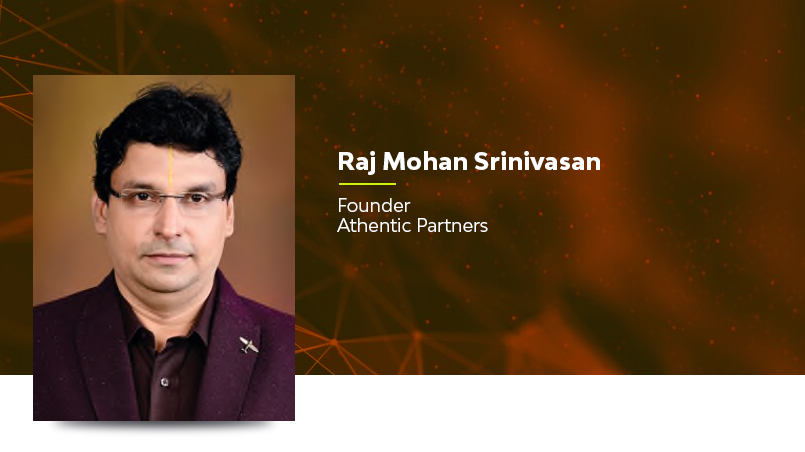
Raj Mohan Srinivasan
He is the former CIO of Sony Pictures Networks, and an Ex-Managing Partner at the IBM Global Delivery (US$4.3B P&L). He is currently the founder of Athentic Partners and is a certified corporate director and a Fellow at the Institute of Directors. Mr. Raj is a Board Advisor and Thought Leader in Digital Transformation, Responsible AI, and Governance Innovation, helping boards and C-suites integrate technology, strategy, and ethics to create measurable enterprise value.
Owned by: Institute of Directors, India
Disclaimer: The opinions expressed in the articles/ stories are the personal opinions of the author. IOD/ Editor is not responsible for the accuracy, completeness, suitability, or validity of any information in those articles. The information, facts or opinions expressed in the articles/ speeches do not reflect the views of IOD/ Editor and IOD/ Editor does not assume any responsibility or liability for the same.