 Quick Links
 Connect us

 Directors Databank (Empannel Yourself)
 Become a
  Become a
  Blog
Blog
 Become an Awards Assessor
 Publications
 Contact Us







Science, Sustainability and Responsible Stewardship: Rethinking Climate Change through Innovation and Resource Efficiency

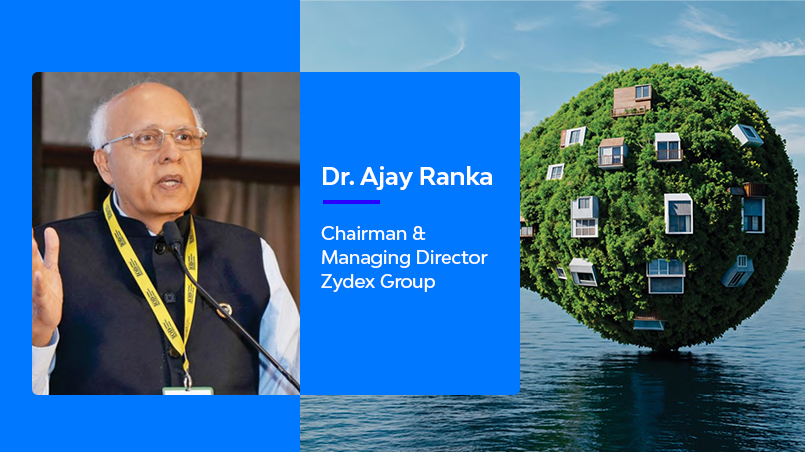
Today, I would like to share a body of research that I consider both scientific and deeply reflective. It is rooted in science and engineering and seeks to understand one of the defining challenges of our time: Climate Change.
We are generally led to believe that the accumulation of carbon dioxide alone is responsible for climate change. My submission is that the complete answer is still unknown. As a chemical engineer, when I examine the issue from a spectroscopic perspective, I find it difficult to conclude that the increase in atmospheric CO₂ alone can account for the magnitude of climate change we are experiencing today. The understanding of global warming originated from experiments conducted in the 1950s, where carbon dioxide and infrared radiation were studied together. The mechanism is quite fascinating. A carbon dioxide molecule behaves somewhat like a pendulum, absorbing infrared radiation and subsequently releasing that energy, thereby contributing to global warming.
However, there is another important dimension that deserves greater attention, the dramatic increase in global irrigation over the last six decades. If we observe the Earth's landmass, particularly between 0° and 30°latitude in the Northern Hemisphere, we find that trillions of tonnes of water are now being artificially applied to land through irrigation systems. From a chemical engineering perspective, evaporation creates a cooling effect. This enormous quantity of evaporating water effectively acts as a heat sink, altering atmospheric heating patterns and air circulation. My intention is not to challenge established science, but to present an engineering perspective that, in my view, also deserves consideration.
Let us also consider Antarctica. Nearly 50% of the world's freshwater remains locked in the Antarctic ice sheet, averaging almost two kilometres in thickness. Unlike the Northern Hemisphere, the Southern Hemisphere has comparatively less landmass and therefore experiences fewer ecological disturbances. This difference may also influence the contrasting climatic patterns observed across the two hemispheres.
Another point worth reflecting upon is the prediction that global sea levels would rise by approximately 80 centimetres by 2025–26. That has not occurred as projected. One possible explanation is the extensive construction of dams, reservoirs and ponds, which retain vast quantities of freshwater on land. Again, this is an engineering interpretation that seeks to broaden our understanding of the overall water balance. While these scientific perspectives are important, there is one area where immediate action is unquestionably required and that is agriculture.
India's soils have steadily lost their organic carbon and biological strength, reducing fertiliser efficiency dramatically. Today, India uses nearly four times more water than China to produce a comparable quantity of food, with agriculture accounting for almost 80 per cent of the country's freshwater consumption. At the same time, we apply nearly 55 million tonnes of fertilisers annually, yet plants utilise only around 20 per cent of them. The remaining nutrients enter rivers and groundwater, creating significant environmental challenges. This, in my opinion, is one of the largest environmental issues that deserves far greater attention. To address this, we have developed technologies that improve soil porosity without relying solely on organic matter. Healthier soils encourage deeper root systems, allowing plants to retain more moisture while reducing irrigation requirements. Countries such as Brazil and Canada have successfully adopted similar approaches to minimise water pollution. Another promising innovation involves harvesting water directly from atmospheric humidity. India is naturally blessed with favourable climatic conditions for such technologies. By combining biodegradable polymer materials with atmospheric moisture capture, we have demonstrated substantial improvements in biomass generation while simultaneously enhancing carbon dioxide absorption.
Allow me now to share how I personally define sustainability.
I have been studying and practising sustainability since 1997, inspired by one of the earliest United Nations lectures on the subject. To me, sustainability is ultimately about responsibility to future generations. When history looks back at our generation, what will it say?
Will it remember us as the generation that consumed the Earth's resources without restraint, or as the generation that chose to restore and protect them?
My belief is that we must strive to leave this planet completely free of unnecessary environmental footprints. To achieve this, I propose three simple principles.
• First, identify the limiting resources within every production system or service and extend their life wherever possible.
• Second, wherever feasible, substitute finite resources with renewable or virtually unlimited alternatives, thereby buying valuable time for future innovation.
• Finally, work steadily towards creating completely footprint-free systems of production and living. This is undoubtedly the most challenging objective, but it should remain our long-term aspiration.
As directors and decision-makers, we also carry an ethical responsibility. Every decision taken in a boardroom should be guided by a simple question: Who ultimately benefits from this decision?
If our actions improve society and protect the environment, they represent positive stewardship. If they damage biodiversity or degrade the natural world, they become negative actions that we should consciously avoid.
Once we are convinced that our decisions serve a greater good, we must pursue them wholeheartedly with our complete commitment, intelligence and integrity.
Ultimately, sustainability is not merely about technology or compliance. It is about making conscious choices that ensure we leave behind a healthier, more resilient planet for future generations.
Thank you very much.
 Back to Home
Author
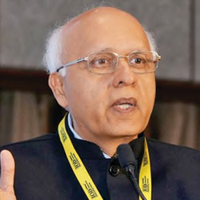
Dr. Ajay Ranka
Owned by: Institute of Directors, India
Disclaimer: The opinions expressed in the articles/ stories are the personal opinions of the author. IOD/ Editor is not responsible for the accuracy, completeness, suitability, or validity of any information in those articles. The information, facts or opinions expressed in the articles/ speeches do not reflect the views of IOD/ Editor and IOD/ Editor does not assume any responsibility or liability for the same.