 Quick Links
 Connect us

 Directors Databank (Empannel Yourself)
 Become a
  Become a
  Blog
Blog
 Become an Awards Assessor
 Publications
 Contact Us







The Boardroom is Where the Future is Approved: Embedding Clean Energy into Corporate Strategy

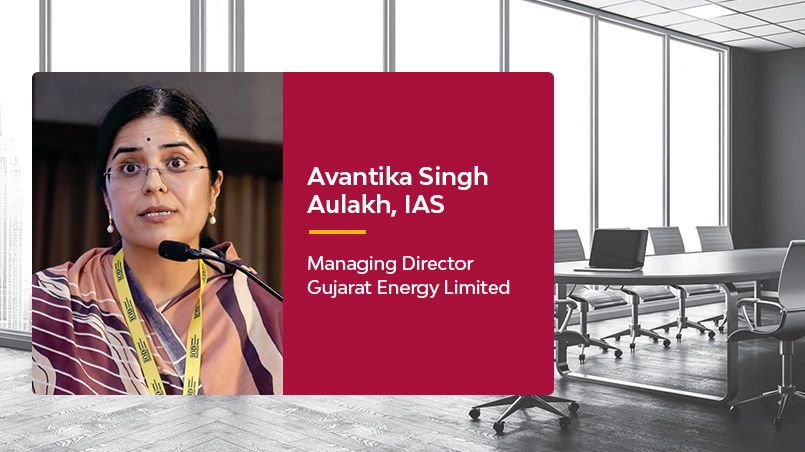
Today, the energy transition is no longer merely an environmental issue. It has become a boardroom priority. Energy security, affordability, climate resilience, investor expectations and global competitiveness are now closely interconnected. For industry, clean energy is no longer simply a matter of regulatory compliance; it is a strategic business imperative.
Boards today must ask themselves:
• Are we investing in the technologies and infrastructure that will define tomorrow's economy?
• Are we building resilient and future-ready businesses?
The role of the Board has therefore evolved far beyond governance and financial oversight. Today, Boards must provide strategic direction, allocate capital wisely, manage emerging risks, and foster innovation that creates long-term sustainable value. Ultimately, the clean energy transition will not be driven by technology alone. It will be driven by the quality of leadership, the decisions and the vision demonstrated in boardrooms. Boards must view clean energy not merely as an environmental commitment, but as a strategic business imperative that strengthens competitiveness, enhances energy security and builds long-term resilience.
The clean energy transition will not be driven by technology alone. It will be driven by the quality of leadership, the decisions and the vision demonstrated in boardrooms.
At the Board of Gujarat Alkalies and Chemicals Limited (GACL), where I currently hold the additional charge of Managing Director, we approved a 160 MW hybrid renewable energy project, comprising both wind and solar power, to meet the energy requirements of our energy-intensive operations while reducing long-term energy costs. The project is expected to generate nearly 37 crore units of clean electricity annually, while significantly reducing carbon emissions. This is an excellent example of how Board-level decisions can simultaneously deliver sustainability, operational excellence and long-term business value.
As we all agree, every successful energy transition begins with a Board decision. Transition requires capital, and capital follows Board conviction. Renewable energy adoption must therefore be embedded within the organisation's long-term corporate strategy rather than being treated as a standalone sustainability initiative. The next decade will be shaped by technologies such as green hydrogen, energy storage systems, carbon capture, AI-enabled energy management and digital grid solutions. Boards have the critical responsibility of evaluating these technologies through the lens of commercial viability, scalability, regulatory readiness, cybersecurity and enterprise risk management.
The objective is not to invest in every emerging technology, but to ensure that our organisations remain future-ready. Energy efficiency continues to offer one of the fastest returns on investment.
It is often said that the cleanest and the cheapest unit of energy is the one we never consume. In an industry such as the chlor-alkali chemical sector, this principle becomes even more critical. One of the quickest and most effective ways to improve sustainability is by enhancing energy efficiency. Every unit of energy saved improves profitability, reduces environmental impact and enhances operational excellence. Boards must therefore encourage investments in energy-efficient technologies, digital monitoring systems and process optimisation.
At the same time, climate risk has become a real business risk. Investors increasingly evaluate organisations on the basis of their ESG performance, disclosure quality and transition preparedness. Sustainability reporting is no longer merely a compliance requirement; it has become an essential element of good corporate governance. However, no single organisation can deliver the energy transition alone.
Governments provide policy direction. Industry brings innovation and execution. Financial institutions mobilise capital. Technology partners accelerate deployment. Regulators create enabling frameworks. Boards must therefore actively encourage public-private partnerships that accelerate infrastructure development, reduce investment risks and build robust clean energy ecosystems.
The journeys of Gujarat Alkalies and Chemicals Limited (GACL) and Gujarat Energy Limited (GEL) demonstrate that Boards can do far more than simply responding to changes, they can lead it. Through innovation, clean technologies and responsible investments, we are contributing to a stronger, greener and more prosperous Gujarat and India. Gujarat is uniquely positioned to lead India's clean industrial transformation. With its strong industrial base, world-class infrastructure, abundant renewable energy potential and entrepreneurial spirit, the State possesses every ingredient needed to become a global hub for sustainable industrial growth.
The responsibility now rests with all of us as Board leaders to ensure that this transition is commercially viable, technologically advanced, socially inclusive and environmentally sustainable. Because, ultimately, the boardroom is where the future is approved.
 Back to Home
Author
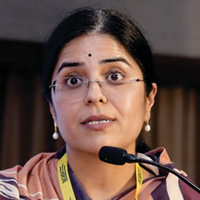
Ms. Avantika Singh Aulakh, IAS
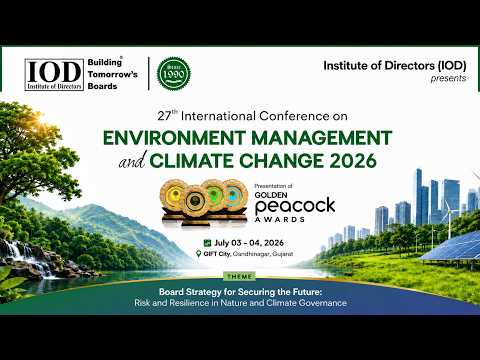
Managing Director, Gujarat Energy Limited, during the Plenary Session IV of the 27th International Conference on Environment Management & Climate Change & Presentation of the Golden Peacock Awards, held on July 03, 2026 at the Radisson GIFT City Club, Gandhinagar, Gujarat.
Owned by: Institute of Directors, India
Disclaimer: The opinions expressed in the articles/ stories are the personal opinions of the author. IOD/ Editor is not responsible for the accuracy, completeness, suitability, or validity of any information in those articles. The information, facts or opinions expressed in the articles/ speeches do not reflect the views of IOD/ Editor and IOD/ Editor does not assume any responsibility or liability for the same.