 Quick Links
 Connect us

 Directors Databank (Empannel Yourself)
 Become a
  Become a
  Blog
Blog
 Become an Awards Assessor
 Publications
 Contact Us







The New Energy Equation: Balancing Energy Security, Affordability and an Adaptive Energy Future

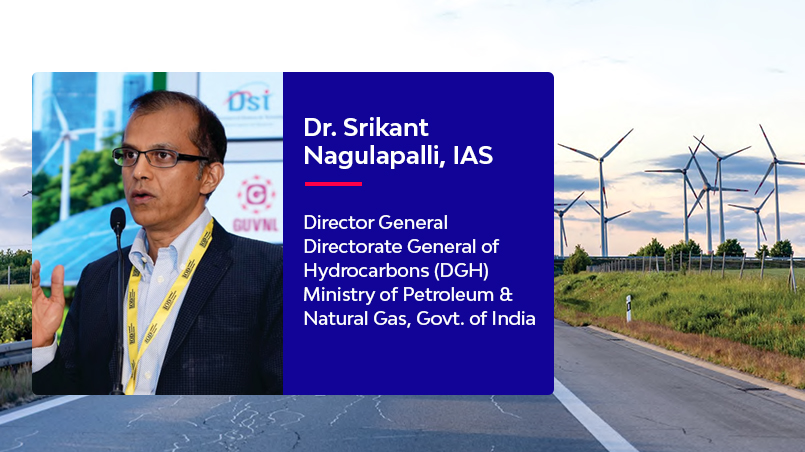
As we all know, India is the world's fastest-growing major economy and is expected to become the third-largest economy within the next few years. We have set ourselves an ambitious goal of becoming a developed nation by 2047.
At the heart of this journey lies one fundamental pillar: Energy Security.
For an economy of nearly 30 trillion dollars, it is essential that the energy powering our growth remains secure and, as far as possible, under our own control. India occupies a uniquely important position in the global climate landscape. On the one hand, our historical contribution to cumulative greenhouse gas emissions has been minimal, and even today we remain among the world's lowest per capita emitters. On the other hand, it is projected that India will account for a significant share of the world's incremental energy demand over the next two decades.
At first glance, this may appear to be a contradiction.
However, rather than being apologetic about it, we should recognise it as a once-in-a-lifetime opportunity. Most developed economies built their energy systems fifty or sixty years ago. Today, they are spending enormous resources retrofitting those systems to meet modern sustainability requirements. India, however, has the opportunity to build an entirely new energy system using the technologies of today and tomorrow. This is the moment for Indian companies to seize that opportunity and develop our own technological capabilities, rather than importing solutions designed primarily to address the historical emissions of other countries.
If we examine India's energy and climate strategy, it revolves around three fundamental principles: Energy security, Affordability and Adaptability.
If we examine India's energy and climate strategy, it revolves around three fundamental principles: Energy security, Affordability and Adaptability.
If you have followed the Union Budget speeches over the past few years, you will notice that the central question is no longer simply how to reduce emissions.
The real question is this: How do we continue to grow while ensuring secure energy supplies, maintaining affordability, and adapting to the impacts of climate change?
As has already been mentioned by earlier speakers, irrespective of our relatively small historical contribution to global emissions, we will nevertheless bear the consequences of climate change. That is the reality we must prepare for.
When we speak of energy security, it is useful to look at the experience of countries such as the United Kingdom, the United States and Japan. Each of these economies achieved sustained growth because they had reliable, affordable access to energy. The importance of energy security became particularly evident during the recent Strait of Hormuz crisis. Within days of the disruption, its effects were felt across industries, markets, restaurants and households around the world. India's strategy for energy security has therefore evolved along two clear directions.
• First, we are expanding every form of energy that can be produced domestically; whether hydrocarbons, renewable energy, nuclear power or any other indigenous source.
• Second, across all major energy-consuming sectors including industry, buildings and transportation, we are placing significant emphasis on energy efficiency and on substituting imported energy with domestic alternatives.
These continue to be among the highest priorities of India's energy policy. Immediately after energy security comes affordability.
For a developing country like India, steadily climbing the economic ladder, affordable energy is not a peripheral concern. It is absolutely fundamental. It affects not only households but also businesses across every sector. Any corporate Board that ignores energy affordability risks losing touch with market realities, and that is a risk no company can afford to take.
The third pillar is climate adaptation. Several speakers before me have already referred to this.
Many of you will remember the devastating floods in Chennai, during which numerous industries lost weeks of production. These losses were not the result of India's historical emissions, but they are consequences of global greenhouse gas emissions accumulated over decades. Nevertheless, it is a challenge that we must confront.
The infrastructure we build today; whether public infrastructure, industrial facilities, supply chains or business assets must be capable of withstanding increasingly frequent and intense climate events. Only then can our economy continue to grow despite these challenges.
This is undoubtedly one of the greatest challenges before us. Whenever companies make major investment decisions, they routinely evaluate interest rates, financial risks and commercial viability.
I would urge them to ask two additional questions.
• How resilient is this infrastructure?
• Will this investment rely on secure and affordable sources of energy?
These are no longer optional considerations. They are fundamental questions for the long-term survival and competitiveness of businesses operating in a country like India.
Finally, I would like to highlight the growing importance of climate governance.
Regulatory institutions such as SEBI and the Reserve Bank of India have introduced new requirements relating to BRSR, as well as climate-related risk disclosures. These developments make it essential that every sustainability commitment made publicly is supported by Board-approved decisions, credible implementation plans and adequate budgetary allocations.
Such governance will not only strengthen business resilience but will also become increasingly important for accessing capital and financing future growth in an environment shaped by climate-related risks.
With those thoughts, I would like to thank the Institute of Directors for providing me with this opportunity and for organising such a timely and meaningful conference.
Thank you very much.
 Back to Home
Author
Dr. Srikant Nagulapalli, IAS
Director General, Directorate General of Hydrocarbons (DGH), Ministry of Petroleum & Natural Gas, Govt. of India, during the Plenary Session II of the 27th International Conference on Environment Management & Climate Change & Presentation of the Golden Peacock Awards, held on July 03, 2026 at the Radisson GIFT City Club, Gandhinagar, Gujarat.
Owned by: Institute of Directors, India
Disclaimer: The opinions expressed in the articles/ stories are the personal opinions of the author. IOD/ Editor is not responsible for the accuracy, completeness, suitability, or validity of any information in those articles. The information, facts or opinions expressed in the articles/ speeches do not reflect the views of IOD/ Editor and IOD/ Editor does not assume any responsibility or liability for the same.