 Quick Links
 Connect us

 Directors Databank (Empannel Yourself)
 Become a
  Become a
  Blog
Blog
 Become an Awards Assessor
 Publications
 Contact Us







Understanding Finance for Corporate Boards: In the Emerging Age of AI

Introduction
The emergence of Artificial Intelligence (AI), digital transformation, data-driven decision-making, and increasingly complex global markets has fundamentally altered the financial landscape in which boards operate. In the emerging age of AI, financial oversight extends beyond reviewing balance sheets and profit-and-loss statements.
Boards are now expected to understand how technology influences financial performance, investment decisions, capital allocation, risk management, and longterm value creation. As organisations navigate digital disruption and heightened stakeholder expectations, financial literacy at the board level has become a strategic necessity.
The Changing Financial Landscape
Modern businesses operate in an environment characterised by volatility, uncertainty, complexity, and rapid technological advancement. Global economic shifts, geopolitical tensions, sustainability requirements, cybersecurity risks, and evolving regulatory frameworks have increased the complexity of financial decision-making.
Artificial Intelligence has further accelerated this transformation. AI-powered analytics, automation, machine learning models, and predictive algorithms are enabling organisations to process vast amounts of financial data in real time. These technologies are improving forecasting accuracy, enhancing operational efficiency, and enabling more informed strategic decisions.

Boards can no longer rely solely on historical financial reports. They must develop the ability to interpret forward-looking insights generated through AI and understand how these insights influence organisational performance and competitive positioning.
As a result, boards can no longer rely solely on historical financial reports. They must develop the ability to interpret forward-looking insights generated through AI and understand how these insights influence organisational performance and competitive positioning.
AI and the Transformation of Financial Management
Artificial Intelligence is reshaping how organisations approach and manage finance. Traditional financial functions that once relied heavily on manual processes are increasingly becoming automated and data-driven. Four areas stand out in particular:
i. Financial Planning and Forecasting
AI-powered forecasting tools analyse historical trends, market conditions, customer behaviour, and economic indicators to generate more accurate financial projections. These systems can identify patterns that may not be visible through conventional analysis.
Boards must understand how AI-generated forecasts are developed, what assumptions underpin them, and how they should be interpreted when making strategic decisions.
ii. Budgeting and Resource Allocation
AI enables organisations to optimise resource allocation by identifying areas of inefficiency and recommending adjustments. Advanced algorithms can evaluate multiple scenarios simultaneously, helping management make more informed budgeting decisions.
Directors should ensure that such tools support strategic objectives rather than merely focusing on short-term financial optimisation.
iii. Risk Assessment
AI significantly enhances risk management capabilities. Predictive analytics can identify emerging financial risks, assess credit exposure, detect anomalies, and highlight potential vulnerabilities before they escalate into major issues.
Boards must understand both the opportunities and limitations of AI-driven risk assessment. While technology improves visibility, human judgment remains essential in evaluating complex and unprecedented risks. iv. Fraud Detection and Compliance
Machine learning systems can monitor transactions continuously and identify unusual patterns that may indicate fraud, financial misconduct, or compliance breaches. This improves governance and strengthens internal controls.
For boards, this represents an opportunity to enhance oversight while reinforcing ethical and regulatory standards.
Financial Oversight in the Age of Intelligent Systems
The integration of AI into financial processes introduces new oversight responsibilities for corporate boards and also expands and redefines them. Three areas demand particular attention:
i. Data Governance: Financial insights generated by AI are only as reliable as the data upon which they are based. Poor-quality data can lead to flawed analysis and poor decision-making.
Boards must ensure that organisations establish robust data governance frameworks covering: Data quality, Data security, Data ownership, Data privacy, and Data integrity.
ii. Algorithmic Accountability: AI models increasingly influence financial decisions, including credit assessments, investment recommendations, pricing strategies, and resource allocation.
Boards should ask critical questions:
• How are these models developed?
• What assumptions are embedded within them?
• Are there biases in the data?
• How transparent are the outputs?
Responsible oversight requires ensuring that AI systems remain accountable, transparent, and aligned with organisational values.
iii. Cybersecurity and Financial Risk: As financial systems become more digital and interconnected, cybersecurity risks increase significantly. Cyber incidents can result in financial losses, regulatory penalties, reputational damage, and operational disruption.
Boards must treat cybersecurity as a strategic financial issue rather than merely a technical concern. Regular oversight, investment in cyber resilience, and robust incident response plans are essential.
Financial Metrics Beyond Traditional Performance
The emerging business environment requires boards to look beyond conventional financial metrics. Historically,
measures such as revenue growth, profit margins, earnings per share, and return on investment dominated board discussions. While these remain important, modern value creation depends on a broader set of indicators.
Increasingly, boards today are paying closer attention to a broader set of indicators like Customer lifetime value; Digital adoption rates; Innovation investments; Data assets; Intellectual capital; Talent retention; ESG performance; and Sustainability initiatives.
AI enables organisations to quantify and analyse many of these previously intangible value drivers with greater precision. Directors must understand how these metrics contribute to the long-term enterprise value and competitive advantage because investors, regulators, and other stakeholders increasingly do.
Capital Allocation in an AI-Driven Economy
One of the most important responsibilities of corporate boards is overseeing capital allocation. This involves deciding how organisational resources should be invested to maximise long-term value creation, but the question is where these organisational resources should be invested and to what end has always been complex.
In the age of AI, boards are increasingly required to evaluate investments across a broad spectrum of transformative initiatives, including: Technology investments; Digital transformation programmes; AI infrastructure; Data management systems; Cybersecurity enhancements; and Research and development initiatives.
Not all of these AI investments will generate value. Directors must evaluate the business case, expected returns, implementation risks, and strategic alignment of technology initiatives.
Effective capital allocation requires balancing innovation with prudence and a willingness to invest in digital future alongside disciplined risk management and a clear line of sight to strategic return.
Despite advances in AI, finance remains fundamentally a human discipline. Technology can provide data, identify patterns, and generate predictions, but it cannot fully replace judgments, ethics, experience, and contextual understanding.
The Human Element in Financial Decision-Making
Despite advances in AI, finance remains fundamentally a human discipline. Technology can provide data, identify patterns, and generate predictions, but it cannot fully replace judgments, ethics, experience, and contextual understanding. These are qualities that directors bring to the boardrooms. Board members bring perspectives that algorithms and they cannot be replicated, including Strategic thinking; Industry knowledge; Governance expertise; Ethical reasoning; and Stakeholder awareness.
Successful organisations will not choose between humans and AI. Instead, they will create environments where technology augments human capabilities and enhances decision-making quality. The future of financial governance lies in combining machine intelligence with human wisdom.
ESG, Sustainability and Financial Value
ESG considerations are increasingly influencing financial performance. Investors, regulators, customers, and employees are demanding greater accountability and transparency from organisations.
For boards, this requires a clear understanding of how sustainability initiatives influence critical business outcomes, including:
• Risk exposure
• Capital access
• Brand reputation
• Operational efficiency
• Long-term profitability
AI is helping organisations measure ESG performance more effectively by analysing environmental impact, supply chain risks, stakeholder sentiment, and sustainability outcomes. As a result, ESG can no longer be treated as a standalone compliance exercise. Financial oversight today requires integrating ESG considerations into strategic and investment decisions rather than treating them as separate compliance requirements. Organisations that successfully align these together will be better positioned to build resilience, maintain stakeholder trust, and create enduring competitive advantage.
Building Financial Competence at Board Level
As financial oversight becomes more complex, continuous learning is essential and boards must invest in the development of director capability across a range of disciplines like: Director education programmes; Emerging technology awareness; Financial literacy enhancement; AI governance training; Scenario planning exercises; and Cybersecurity awareness.
The objective is not to turn every director into a financial expert or technology specialist. Rather, it i to ensure that directors possess sufficient understanding to ask the right questions, challenge assumptions, and contribute effectively to decision-making.
Programmes such as Finance for Non-Finance Directors and Board Governance Training initiatives play an increasingly important role in preparing directors for these responsibilities.
The Future Boardroom
The boardroom of the future will be significantly different from that of the past. Board discussions will increasingly focus on real-time financial intelligence; predictive analytics; AI governance; digital transformation; cyber resilience; sustainability performance; and stakeholder value creation.
Directors will need to interpret both financial statements and algorithmic insights. The most effective boards will combine financial discipline with technological understanding, enabling them to guide organisations through uncertainty and disruption.
In this environment, competitive advantage will increasingly depend on the quality of board oversight and the ability of directors to understand the intersection of finance, technology, governance, and strategy.
Conclusion
The emerging age of AI is transforming the financial responsibilities of corporate boards. Financial literacy remains fundamental, but it must now be complemented by an understanding of data, technology, cybersecurity, AI governance, and sustainability. Boards can no longer rely exclusively on historical financial reporting. They must embrace predictive insights, evaluate technology investments, oversee digital risks, and ensure that innovation supports long-term value creation. At the same time, they must recognise that technology is a tool, not a substitute for leadership and judgment.
Understanding finance in the age of AI requires a broader perspective—one that integrates traditional financial principles with emerging technological realities. Directors who develop this capability will be better positioned to provide effective oversight, manage risk, and guide their organisations towards sustainable growth and resilience. As businesses continue to evolve, the future will belong to boards that successfully combine financial acumen, technological awareness, strategic foresight, and responsible governance. Such boards will not only navigate change but also transform it into opportunity, creating lasting value for shareholders, stakeholders, and society alike.
Several discussions/conferences organised by the IOD indicate that with the advent of AI, the shape of board meetings is already changing. Earlier, only the manufacturing industry was credited to go in for manmachine interface. Now, board meetings are also working towards that order. The way to present information, the way to question and the way to verify data, all is changing. Companies will have to upload their data on their safe serves only, otherwise the same, will go to a public one. Each board member is being aware of AI culture but expecting each member to be already aware, is not a right expectation. AI is expected to reduce work, as many queries, data, and communication could now be scooped out through AI tools.
Experts project that by 2030, industries can expect digital CFOs and digital Company Secretaries along with real CFOs and real Company Secretaries. And, most of the board members will be communicating with the digital CFO to answer their queries. The Board meetings will be devoted to human elements. AI is anyhow going to make significant changes in the way the boards will operate. The expectation is that members will not be wasting their time on scanning data, that will be undertaken by AI tools. However, those involved in dealing in finance at the board level will have to efficiently use these AI tools to ensure effective decision making.
 Back to Home
Author

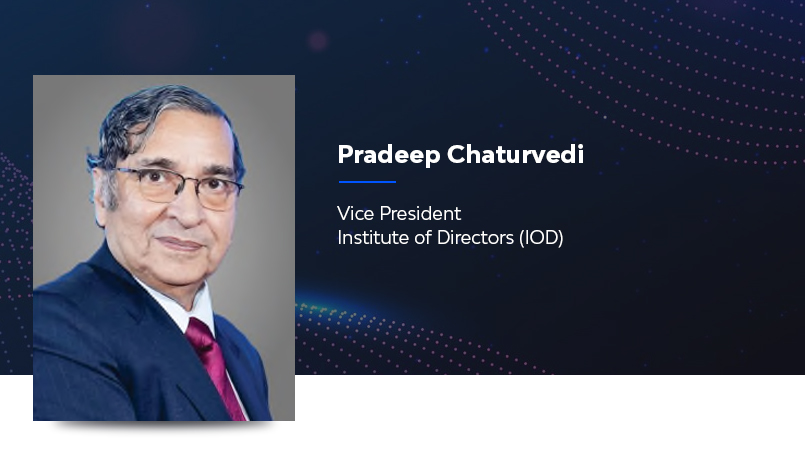
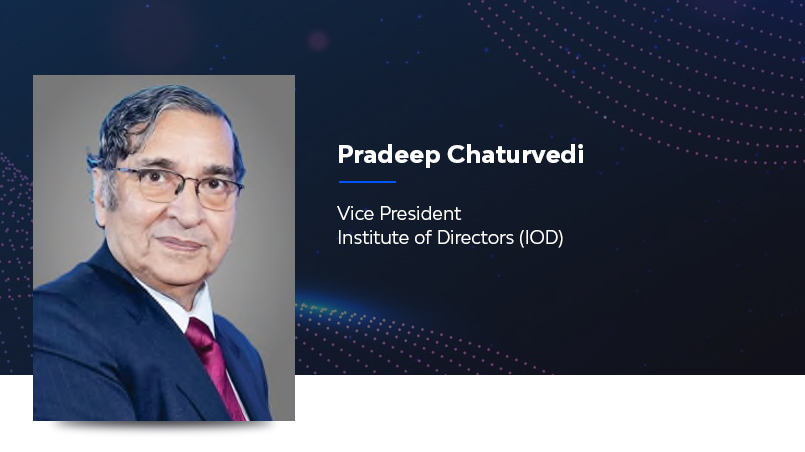
Pradeep Chaturvedi
Vice President - Institute of Directors
He is former Advisor FAO & former Chairman, Institution of Engineers, Delhi. He is a Mechanical Engineer & has been involved with Environment & Energy Policy (planning & implementation) of energy projects under the UN Agencies for over three decades in India & other Asian and Pacific countries. He is Vice-President, World Environment Foundation & Institute of Directors, India.
Owned by: Institute of Directors, India
Disclaimer: The opinions expressed in the articles/ stories are the personal opinions of the author. IOD/ Editor is not responsible for the accuracy, completeness, suitability, or validity of any information in those articles. The information, facts or opinions expressed in the articles/ speeches do not reflect the views of IOD/ Editor and IOD/ Editor does not assume any responsibility or liability for the same.